🚚 Free Worldwide Shipping on All Orders!Shop Now

Joanna Bourke: An Intimate History Of Killing [2000]
It is almost universally accepted among writers on warfare that battle is a terrible experience, and that those who fight are at the very least sobered, and often deeply traumatised, by the horrors of combat. Bourke uses the letters, diaries, memoirs and reports of veterans from three conflicts - the First World War, the Second World War and the Vietnam War - to establish a picture of the man-at-arms. She suggests that the structure of war encourages pleasure in killing, and that perfectly ordinary, gentle human beings can become enthusiastic killers without becoming 'brutalised'. Bourke forces the reader to face some disconcerting truths about societies that can so easily organize themselves for war.
Product Information
Product Information
Shipping & Returns
Shipping & Returns
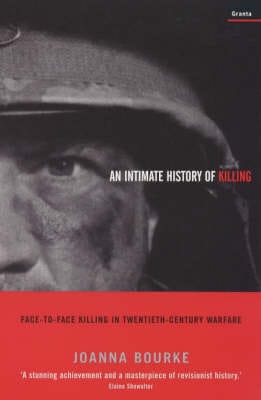
Joanna Bourke: An Intimate History Of Killing [2000]
Joanna Bourke: An Intimate History Of Killing [2000]
It is almost universally accepted among writers on warfare that battle is a terrible experience, and that those who fight are at the very least sobered, and often deeply traumatised, by the horrors of combat. Bourke uses the letters, diaries, memoirs and reports of veterans from three conflicts - the First World War, the Second World War and the Vietnam War - to establish a picture of the man-at-arms. She suggests that the structure of war encourages pleasure in killing, and that perfectly ordinary, gentle human beings can become enthusiastic killers without becoming 'brutalised'. Bourke forces the reader to face some disconcerting truths about societies that can so easily organize themselves for war.
Select Condition
From $2.41
Original: $8.03
-70%Joanna Bourke: An Intimate History Of Killing [2000]—
$8.03
$2.41Product Information
Product Information
Shipping & Returns
Shipping & Returns
Description
It is almost universally accepted among writers on warfare that battle is a terrible experience, and that those who fight are at the very least sobered, and often deeply traumatised, by the horrors of combat. Bourke uses the letters, diaries, memoirs and reports of veterans from three conflicts - the First World War, the Second World War and the Vietnam War - to establish a picture of the man-at-arms. She suggests that the structure of war encourages pleasure in killing, and that perfectly ordinary, gentle human beings can become enthusiastic killers without becoming 'brutalised'. Bourke forces the reader to face some disconcerting truths about societies that can so easily organize themselves for war.